When a vertical mast makes sense
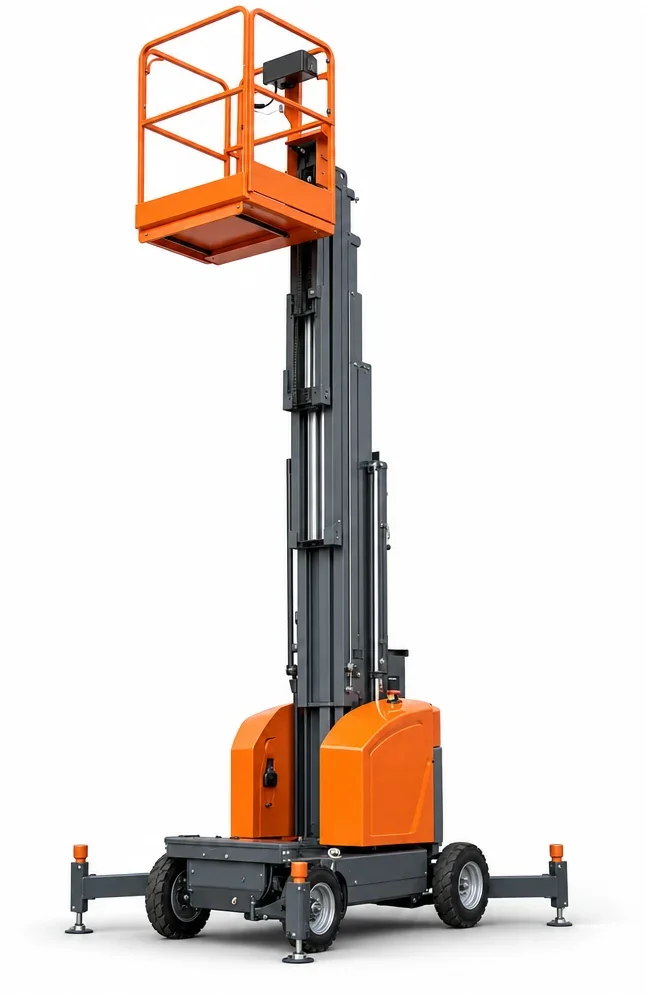
If the machine can sit directly below the task on level concrete, a mast lift minimizes setup space and floor loading. Typical uses include:
- Light maintenance above congested aisles or between machinery
- Inventory tech, sensors, or sprinkler head access
- Quick service in areas where a scissor’s deck is too wide
Measure before you compare models:
- Door and aisle widths along the entire route
- Required platform height and any overhead thresholds
- Floor sensitivity and turning radius at pinch points
Local facility considerations
Greensboro’s logistics and aerospace-oriented interiors often run continuous shifts with narrow lanes. Non-marking tires, tight turning, and quiet operation matter. Where mezzanines or conveyors block a straight shot, a small articulating boom may be more efficient. See /articulating-boom-lift-rental/.
Indoor versus outdoor use
Mast lifts are built for slab. Exterior work in Greensboro often encounters clay-based soils, curbs, and grade changes that exceed a mast lift’s design. If the task is outdoors or over uneven ground, look at /rough-terrain-scissor-lift-rental/ or /telescopic-boom-lift-rental/ depending on height and geometry.
As with elevated tasks, the selected unit’s instructions and facility procedures govern acceptable use.
Greensboro planning checklist
- Confirm uninterrupted slab from staging to work area
- Note the narrowest aisle and lowest doorway
- Verify charge access for electric units during off-hours
- Identify any overhead obstructions that would require up-and-over reach